Filter by
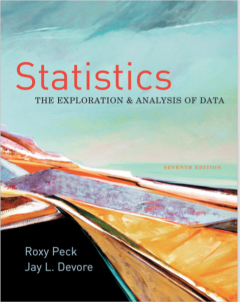
Statistics:The Exploration and Analysis of Data
- Edition
- 7th edition
- ISBN/ISSN
- 978-0-8400-5801-0
- Collation
- -
- Series Title
- Statistics:The Exploration and Analysis of Data
- Call Number
- -
- Edition
- 7th edition
- ISBN/ISSN
- 978-0-8400-5801-0
- Collation
- -
- Series Title
- Statistics:The Exploration and Analysis of Data
- Call Number
- -

DATABASE MANAGEMENT SYSTEMS
Database Management System (DBSM) are an intetgrated and crucial component of most successful GIS. DBMS are used to store, manipulate and retrieve data from a database. A key element in creating a spatial database design using a variety of data modelling techniques. Although the range of DBMS structures used in GIS includes inverted list, hierarchical, network and relational designs, it is the…
- Edition
- -
- ISBN/ISSN
- -
- Collation
- 1-17
- Series Title
- -
- Call Number
- -
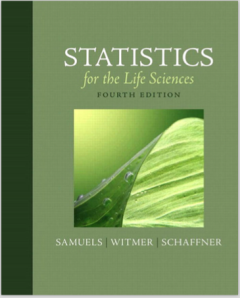
STATISTICS FOR THE LIFE SCIENCES
- Edition
- 4th edition
- ISBN/ISSN
- 978-0-321-65280-5
- Collation
- -
- Series Title
- STATISTICS FOR THE LIFE SCIENCES
- Call Number
- -
- Edition
- 4th edition
- ISBN/ISSN
- 978-0-321-65280-5
- Collation
- -
- Series Title
- STATISTICS FOR THE LIFE SCIENCES
- Call Number
- -
Summary Minutes of the Working Group (WG) Meeting "Harmonization of Consume…
The Econometric Study and Model to Estimate Land Prices undertaken by an external contractor on behalf of Eurostat showed that a separation of the land price part from the structure part was not feasible from the data at hand. Notwithstanding the traditional partition to land and structure becomes less clear depending on the allocation of the location variables. More conceptual work and a furth…
- Edition
- -
- ISBN/ISSN
- -
- Collation
- 1-3
- Series Title
- -
- Call Number
- -

YOUTH QUAKE Population, fertility and environment in the 21st century
The earth faces a future of rising populations and growing strains on the planet . Whatever else the future holds, significant population increase is inevitable and the current UN forecast of 9 .2 billion by 2050 – itself a 40 per cent increase on the 6 .7 billion in 2007 – may turn out to be an underestimate . The environmental damage resulting from population increase is already widesprea…
- Edition
- -
- ISBN/ISSN
- -
- Collation
- 1-28
- Series Title
- -
- Call Number
- -

Statistics Applied to Clinical Studies
- Edition
- 5th edition
- ISBN/ISSN
- 978-94-007-2862-2
- Collation
- -
- Series Title
- Statistics Applied to Clinical Studies
- Call Number
- -
- Edition
- 5th edition
- ISBN/ISSN
- 978-94-007-2862-2
- Collation
- -
- Series Title
- Statistics Applied to Clinical Studies
- Call Number
- -
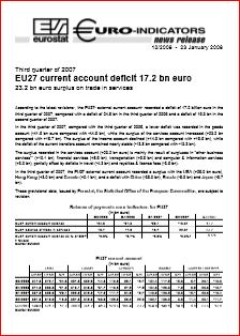
Third quarter of 2007 EU27 current account deficit 17.2 bn euro 23.2 bn euro …
According to the latest revisions1, the EU272 external current account3 recorded a deficit of 17.2 billion euro in the third quarter of 2007, compared with a deficit of 24.6 bn in the third quarter of 2006 and a deficit of 16.3 bn in the second quarter of 2007. In the third quarter of 2007, compared with the third quarter of 2006, a lower deficit was recorded in the goods account (-41.5 bn eu…
- Edition
- -
- ISBN/ISSN
- -
- Collation
- 1-6
- Series Title
- -
- Call Number
- -
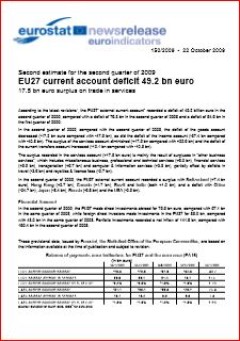
Second estimate for the second quarter of 2009 EU27 current account deficit 4…
In the second quarter of 2009, compared with the second quarter of 2008, the deficit of the goods account decreased (-17.2 bn euro compared with -47.5 bn), as did the deficit of the income account (-37.4 bn compared with -40.8 bn). The surplus of the services account diminished (+17.5 bn compared with +22.6 bn) and the deficit of the current transfers account increased (-12.1 bn compared with -…
- Edition
- -
- ISBN/ISSN
- -
- Collation
- 1-5
- Series Title
- -
- Call Number
- -
How to Write Letters
- Edition
- -
- ISBN/ISSN
- -
- Collation
- -
- Series Title
- -
- Call Number
- -
- Edition
- -
- ISBN/ISSN
- -
- Collation
- -
- Series Title
- -
- Call Number
- -
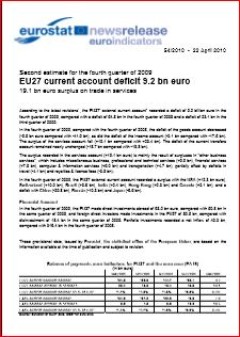
Second estimate for the fourth quarter of 2009 EU27 current account deficit 9…
According to the latest revisions1, the EU272 external current account3 recorded a deficit of 9.2 billion euro in the fourth quarter of 2009, compared with a deficit of 54.8 bn in the fourth quarter of 2008 and a deficit of 23.1 bn in the third quarter of 2009.
- Edition
- -
- ISBN/ISSN
- -
- Collation
- 1-5
- Series Title
- -
- Call Number
- -

Probability & Statistics for Engineers & Scientists
- Edition
- -
- ISBN/ISSN
- 978-0-321-62911-1
- Collation
- -
- Series Title
- Probability & Statistics for Engineers & Scientists
- Call Number
- -
- Edition
- -
- ISBN/ISSN
- 978-0-321-62911-1
- Collation
- -
- Series Title
- Probability & Statistics for Engineers & Scientists
- Call Number
- -
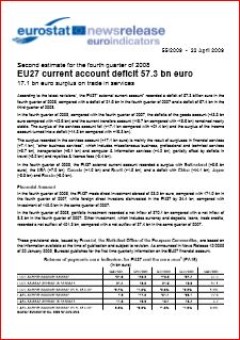
Second estimate for the fourth quarter of 2008 EU27 current account deficit 5…
According to the latest revisions1, the EU272 external current account3 recorded a deficit of 57.3 billion euro in the fourth quarter of 2008, compared with a deficit of 21.6 bn in the fourth quarter of 2007 and a deficit of 67.4 bn in the third quarter of 2008.
- Edition
- -
- ISBN/ISSN
- -
- Collation
- 1-5
- Series Title
- -
- Call Number
- -

Crime and Punishment
- Edition
- -
- ISBN/ISSN
- -
- Collation
- -
- Series Title
- -
- Call Number
- -
- Edition
- -
- ISBN/ISSN
- -
- Collation
- -
- Series Title
- -
- Call Number
- -

Banking: An Introduction
- Edition
- 1st Edition
- ISBN/ISSN
- 9788740305968
- Collation
- -
- Series Title
- Banking: An Introduction
- Call Number
- -
- Edition
- 1st Edition
- ISBN/ISSN
- 9788740305968
- Collation
- -
- Series Title
- Banking: An Introduction
- Call Number
- -

Time Management for Creative People
- Edition
- -
- ISBN/ISSN
- -
- Collation
- -
- Series Title
- -
- Call Number
- -
- Edition
- -
- ISBN/ISSN
- -
- Collation
- -
- Series Title
- -
- Call Number
- -
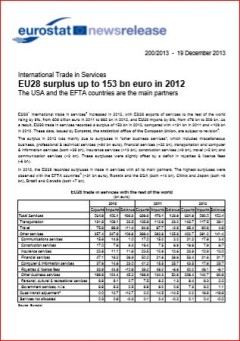
First estimate for the fourth quarter of 2010 Euro area and EU27 employment u…
The number of persons employed in both the euro area1 (EA16) and the EU271 increased by 0.1% in the fourth quarter of 2010 compared with the previous quarter, according to national accounts estimates published by Eurostat, the statistical office of the European Union. In the third quarter of 2010, employment was stable in the euro area and grew in the EU27 by 0.1%. These figures are seasonally …
- Edition
- -
- ISBN/ISSN
- -
- Collation
- 1-4
- Series Title
- -
- Call Number
- -
Business Hints for Men and Women
- Edition
- -
- ISBN/ISSN
- -
- Collation
- -
- Series Title
- -
- Call Number
- -
- Edition
- -
- ISBN/ISSN
- -
- Collation
- -
- Series Title
- -
- Call Number
- -

International Trade in Services EU25 surplus in trade in services increased t…
In 2004, EU25 1 external trade in services 2 recorded a surplus of 42.8 billion euro, compared to 37.0 bn in 2003. This increased surplus was mainly due to a higher surplus in transportation (+13.4 bn in 2004 compared to +7.0 bn in 2003), while the deficit registered for travel was slightly lower (-12.9 bn compared to -13.4 bn). The surplus recorded for “other services” fell slightly (+42.5…
- Edition
- -
- ISBN/ISSN
- -
- Collation
- 1-3
- Series Title
- -
- Call Number
- -

How to Get on in the World A Ladder to Practical Success
- Edition
- -
- ISBN/ISSN
- -
- Collation
- -
- Series Title
- -
- Call Number
- -
- Edition
- -
- ISBN/ISSN
- -
- Collation
- -
- Series Title
- -
- Call Number
- -

International Trade in Services EU surplus down to almost €163 bn in 2014 T…
The main components of EU international trade in services were "other business services" (R&D, business, professional & technical services) which accounted in 2014 for 26% of EU total exports and 28% of imports, Transport services (18% and 20%), Travel services (14% and 16%), Telecommunications, computer and information services (12% and 9%) and Financial services (10% and 6%). In 2014, the…
- Edition
- -
- ISBN/ISSN
- -
- Collation
- 1-3
- Series Title
- -
- Call Number
- -
ANALYZING CHARACTER The New Science of Judging Men; Misfits in Business, the …
- Edition
- -
- ISBN/ISSN
- -
- Collation
- -
- Series Title
- -
- Call Number
- -
- Edition
- -
- ISBN/ISSN
- -
- Collation
- -
- Series Title
- -
- Call Number
- -

Intangible Assets: Measuring and Enhancing Their Contribution to Corporate V…
- Edition
- -
- ISBN/ISSN
- 978-0-309-14414
- Collation
- -
- Series Title
- -
- Call Number
- -
- Edition
- -
- ISBN/ISSN
- 978-0-309-14414
- Collation
- -
- Series Title
- -
- Call Number
- -

Equity Market: An Introduction
- Edition
- -
- ISBN/ISSN
- 9788740305944
- Collation
- -
- Series Title
- Equity Market: An Introduction
- Call Number
- -
- Edition
- -
- ISBN/ISSN
- 9788740305944
- Collation
- -
- Series Title
- Equity Market: An Introduction
- Call Number
- -

The Free Press
- Edition
- -
- ISBN/ISSN
- -
- Collation
- -
- Series Title
- -
- Call Number
- -
- Edition
- -
- ISBN/ISSN
- -
- Collation
- -
- Series Title
- -
- Call Number
- -

A Guide to the ATM and Debit Card Industry
- Edition
- -
- ISBN/ISSN
- 0-9744809-0-8
- Collation
- -
- Series Title
- -
- Call Number
- -
- Edition
- -
- ISBN/ISSN
- 0-9744809-0-8
- Collation
- -
- Series Title
- -
- Call Number
- -
Business Correspondence
- Edition
- -
- ISBN/ISSN
- -
- Collation
- -
- Series Title
- -
- Call Number
- -
- Edition
- -
- ISBN/ISSN
- -
- Collation
- -
- Series Title
- -
- Call Number
- -
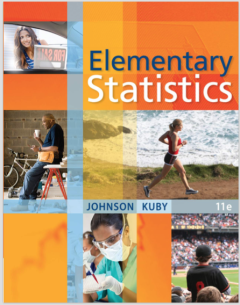
Elementary Statistics
- Edition
- -
- ISBN/ISSN
- 978-0-538-73350-2
- Collation
- -
- Series Title
- Elementary Statistics
- Call Number
- -
- Edition
- -
- ISBN/ISSN
- 978-0-538-73350-2
- Collation
- -
- Series Title
- Elementary Statistics
- Call Number
- -
Science and Technology Leadership in American Government: Ensuring the Best P…
This report is from a study of the federal government's capacity to recruit highly qualified individuals for the top science and technology (S&T)-related leadership positions in the executive branch. The effort was supported by the Carnegie Commission on Science, Technology, and Government and by the National Research Council Fund of the Academies—National Academy of Sciences, National Academ…
- Edition
- -
- ISBN/ISSN
- 0-309-58448-5
- Collation
- 1-103
- Series Title
- -
- Call Number
- -
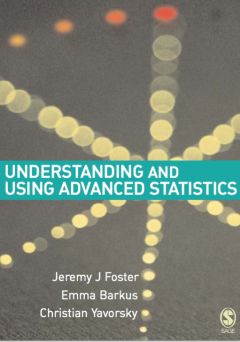
UNDERSTANDING AND USING ADVANCED STATISTICS
- Edition
- -
- ISBN/ISSN
- 1 4129 0013 1
- Collation
- -
- Series Title
- UNDERSTANDING AND USING ADVANCED STATISTICS
- Call Number
- -
- Edition
- -
- ISBN/ISSN
- 1 4129 0013 1
- Collation
- -
- Series Title
- UNDERSTANDING AND USING ADVANCED STATISTICS
- Call Number
- -
 Computer Science, Information & General Works
 Philosophy & Psychology
 Religion
 Social Sciences
 Language
 Pure Science
 Applied Sciences
 Art & Recreation
 Literature
 History & Geography